Many people store valuable information on their phones. This can include directions to get to a location, medical information, plans for upcoming meetings and the names and contact information of other people that you may need to contact in an emergency. In the event of an emergency a paper reference could be used to assist in making a few key decisions while you try to sort out the situation. The reference would aim to contain the fewest amount of up to date information as possible in a format that could be understood by someone else in an emergency.
Decide what another person needs first
Start with the person who is most likely to come across your card in an emergency and work from there. List the information that they would need to know in order to contact the right people for you. The details of your emergency contacts, their relationship to you and how you can be contacted by them should all be included on the card.
Use your full name on the card together with the names of one or two emergency contacts. This is to include the relationships of the contacts to you. So for example a partner, parent, friend or other household member should be listed with their phone number in an easily understandable format.
As with your phone, do not replicate the entire content of your medical information on your contact card. Only list details of serious medical conditions that would affect how you are treated in an emergency, such as life-threatening allergies, serious health problems, and the medications that you need to take on an ongoing basis. You should also detail any special communication needs that you have.
Make the information readable in bad conditions
When choosing what to write on the card in terms of print size, remember that small print has little value. Try to write in clear, high contrast print so that the information can be read by tired eyes in a dimly lit situation. It's also a good idea to have the card printed before making copies of it. Try reading the printed copies in poor light to see if you can read them comfortably.
Use simple and descriptive labels for your details instead of using abbreviations or acronyms. This is especially important for details which may require further explanation. Provide a few more words to describe any unusual details instead of creating a new acronym.
It's also important to leave enough of a margin on the pages to allow for wear and tear. Where you have punched holes (e.g. to attach the card to a loop of cord), make sure that none of the crucial information is on the same side of the paper as the hole(s). Do not cover important text with sticky tape as it tends to form a dull, cloudy patch over time.
Protect it from water without hiding it
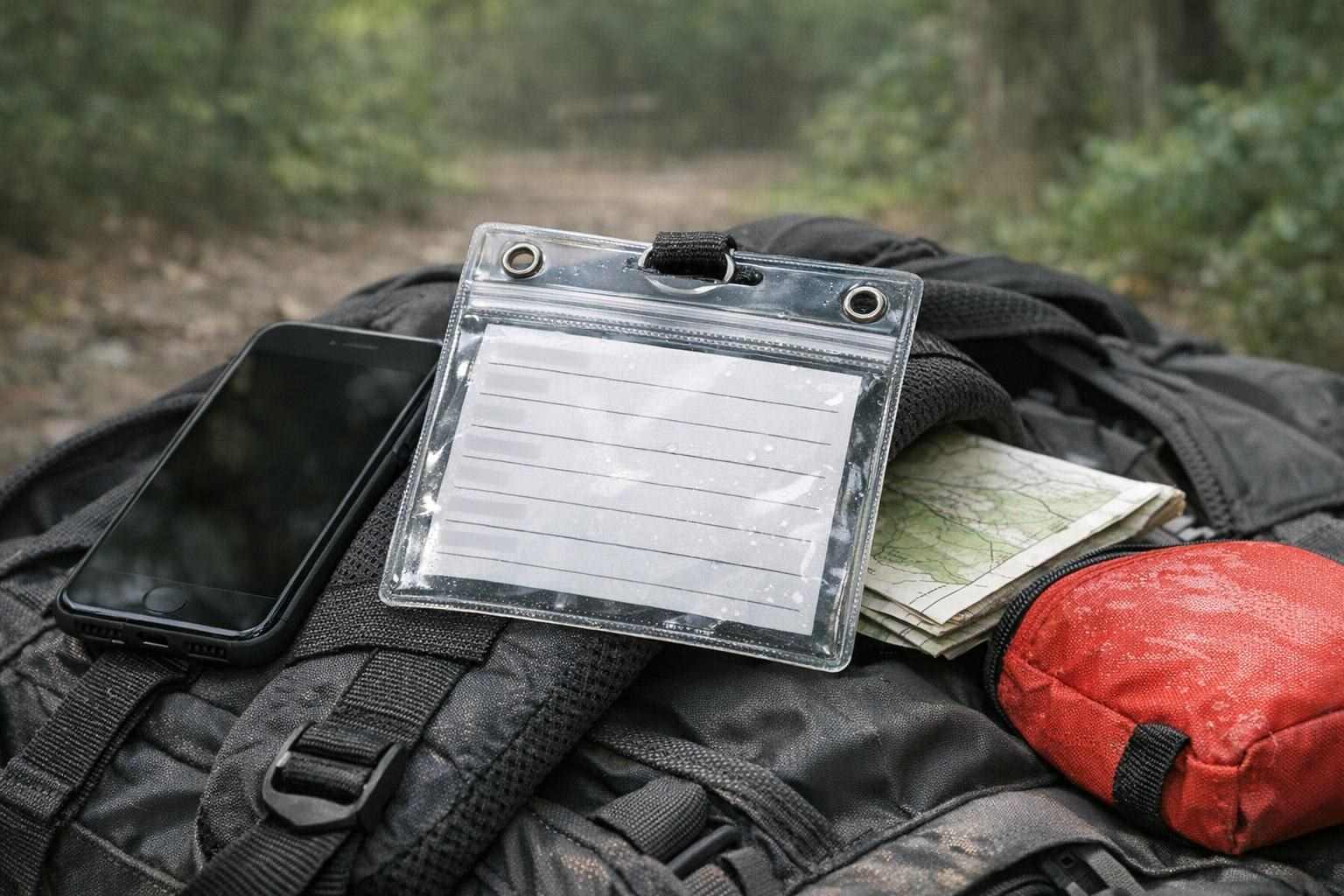
To prevent a simple piece of paper from becoming affected by water, sweat or condensation, store it in a waterproof sleeve, in a sealed pouch or in another type of holder. However, make sure the container does not cause any glare and that the card can be easily removed from it.
It's also important to remember that just because something is sealed, does not mean it will be protected. Try to open and close any container before you put your card in it, check for any signs of moisture and then test the paper for any damage after a trip. Avoid storing your card near sharp objects or with food for example, also make sure that it won't get damaged if the item containing it is crushed.
Remember that you will probably include private information on the card (like your full home address) that you would not want a stranger to read. On the other hand, a locked pouch containing only your phone is not very useful as a backup. So include on the card just enough information to enable another person to identify you, contact your emergency contacts for you, and provide any relevant medical information that may affect the way you are treated in an emergency.
Keep the backup separate from the phone
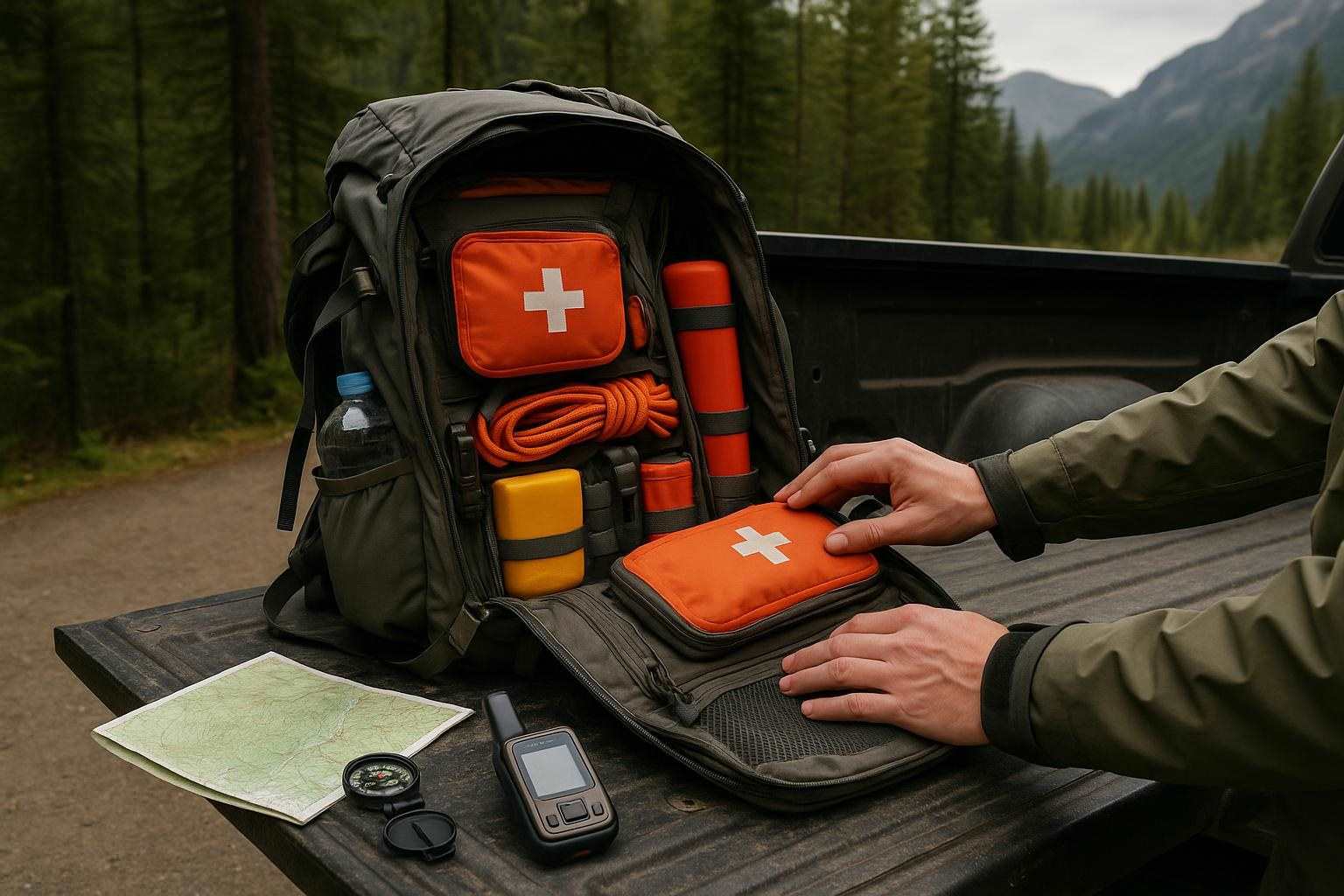
Try to keep the main copy of your card in a different place to your phone, such as in your wallet, on a standby in your permit holder, in your first aid kit, or in a special pocket on your rucksack. It's no good copying a system that you will not remember.
For group travel it is wise to inform other members of your party where you have left the emergency contact card. For solo travel it is wise to inform a trusted friend or family member of where you have left your emergency contact card, who your nominated contacts are and what information the emergency contact card contains.
In planning for emergencies, it is often assumed that the person finding the person lost will be able to use a phone number in another part of the world. In practice this is unlikely to be the case. Therefore it is wise to check the correct way to dial numbers in the countries that you will be visiting, and to include this on your emergency contact card, possibly with a few words of explanation as well.
Match the card to the outing
You need to adapt your Emergency Contact Card to the type of activity you are undertaking. A day walk on a local lake is not going to create the same type of needs as a long remote camp or a winter traverse. Think about the information that will be needed in the event of an unexpected delay or if you become lost and are unable to continue for some reason.
For temporary details, the best approach is to make removable inserts or notes for each trip that cover any extra details you require for that trip. Remember to update these as the rest of your party's information changes and store them with your other temporary information for that trip until you return and then put them back in your store.
Remember, the emergency contact card is a backup to your emergency preparations. Make sure you have left a responsible person with a copy of your trip plan, and that you are carrying the correct navigation and shelter equipment. Check the local procedures for calling for help and make sure that you are complying with any regulations for activities such as mountaineering or diving. For these activities, check with the governing body for up to date information.
Test it before you trust it
Check a card within a few minutes for a few things: 1) Can the information be read in poor light? 2) Can someone else who wrote the card in the first place recreate the emergency contact information and understand the medical information (and the reason for it)? 3) Do all numbers still work? 4) Do all people contacted have a copy of the card and know that they have been listed?
Check the holder for cracks and for signs of moisture. Also test whether the card can be removed easily while wearing gloves or while the card is stashed in outer clothing pockets. Check whether the sleeve is too tight, whether writing is barely visible, or whether one of the contacts has changed her phone number in the meantime.
A useful check, taking only a few minutes, is to read all the writing on the card in poor light. Then ask someone else to use the information on the card to find the main contact's name and try to explain the medical points. Check that all the phone numbers on the card are current and that all the contacts know that the person listed is contactable in case of an emergency. The information on the card must remain up to date and accurate in case of an emergency.
A simple emergency contact card does not have to contain lots of information. Just enough to be of use, clearly printed and carried separately from the rest of your gear.