A satellite messenger, paper map or well-stocked pack cannot make a remote journey risk-free on its own. Each depends on conditions that can fail: a dead battery, hidden injury, blocked trail or sudden storm. A layered backup plan uses several modest protections instead of one complicated solution. The goal is to spot warning signs early, keep basic options working and know when to turn back or contact emergency services.
Start with a route someone else can understand
Before leaving, describe the route so another person could follow it: trailheads, planned camps, major junctions, water crossings and your expected finish. Include a return time and a clear instruction about when your contact should seek help. "Back Sunday" leaves too much room for delay.
Share the plan with someone reliable who will monitor it. Explain changes before they happen when possible. For remote trips, include vehicle details, group names and relevant medical information, but share no more personal data than necessary.
Include an exit strategy. Mark shorter routes to a road, ranger station or other known point. If weather worsens, someone develops concerning symptoms or daylight is running out, leave the objective unfinished.
Build navigation backup before the trailhead
Electronic navigation depends on charged batteries, readable screens, stored map data and an undamaged device. Check the route at home, download needed data while connected and confirm that the device shows your position before setting out. Do not wait for a junction to discover that the map covers the wrong area.
Carry a paper map and compass, and learn to use both. Keep the map in a sealed sleeve, and check the compass for a sticking needle or damaged housing. Keep it away from magnetic objects when taking a bearing.
Small warning signs often precede a navigation error: uncertainty at a junction, repeated backtracking or terrain that no longer matches the route. Stop and compare the map, landscape and last known position instead of walking on in hope. If your position is uncertain and conditions are worsening, staying in a safe location may be wiser than continuing blind.
Treat shelter as a backup, not a last resort
Your tent or tarp is only one part of shelter. Before departure, check seams, guylines, poles, zippers, stakes and fabric waterproofing. Pack repairs suited to the equipment, plus insulation from wet ground and wind. A shelter that is difficult to pitch with cold hands is not dependable.
Choose campsites with drainage, protection from falling branches and distance from watercourses. Avoid dry-looking channels and unstable slopes. Reassess the site if rain, strong wind or rising water develops.
Persistent shivering, clumsiness, confusion and unusual drowsiness may indicate cold stress rather than ordinary fatigue. Move the person out of wind and wet conditions, replace damp layers, provide appropriate warm fluids if they are alert and can swallow, and seek emergency guidance if symptoms are severe, worsening or persistent.
Give emergency communication more than one path
A phone is valuable, but coverage is uneven and batteries fail. Confirm how each communication device works, charge it fully and keep it protected but accessible. Test its emergency function according to the manufacturer's instructions; do not assume an untested device will work as expected in poor weather or under stress.
A layered approach might include a phone, satellite communicator or personal locator device where appropriate, and a written plan held by someone at home. Carry a power bank and correct cable, but remember that neither solves a damaged port, lost device or blocked signal. If you can send a message, keep it concise: location, problem, number affected, immediate hazards and help required.
Contact emergency services early for serious injury, altered consciousness, breathing difficulty, uncontrolled bleeding, suspected hypothermia or anyone unable to continue safely. Device requirements, reporting procedures and rescue access vary by country and can change, so check current official guidance before travelling. Do not delay urgent care while trying to create a perfect plan.
Check survival gear by function
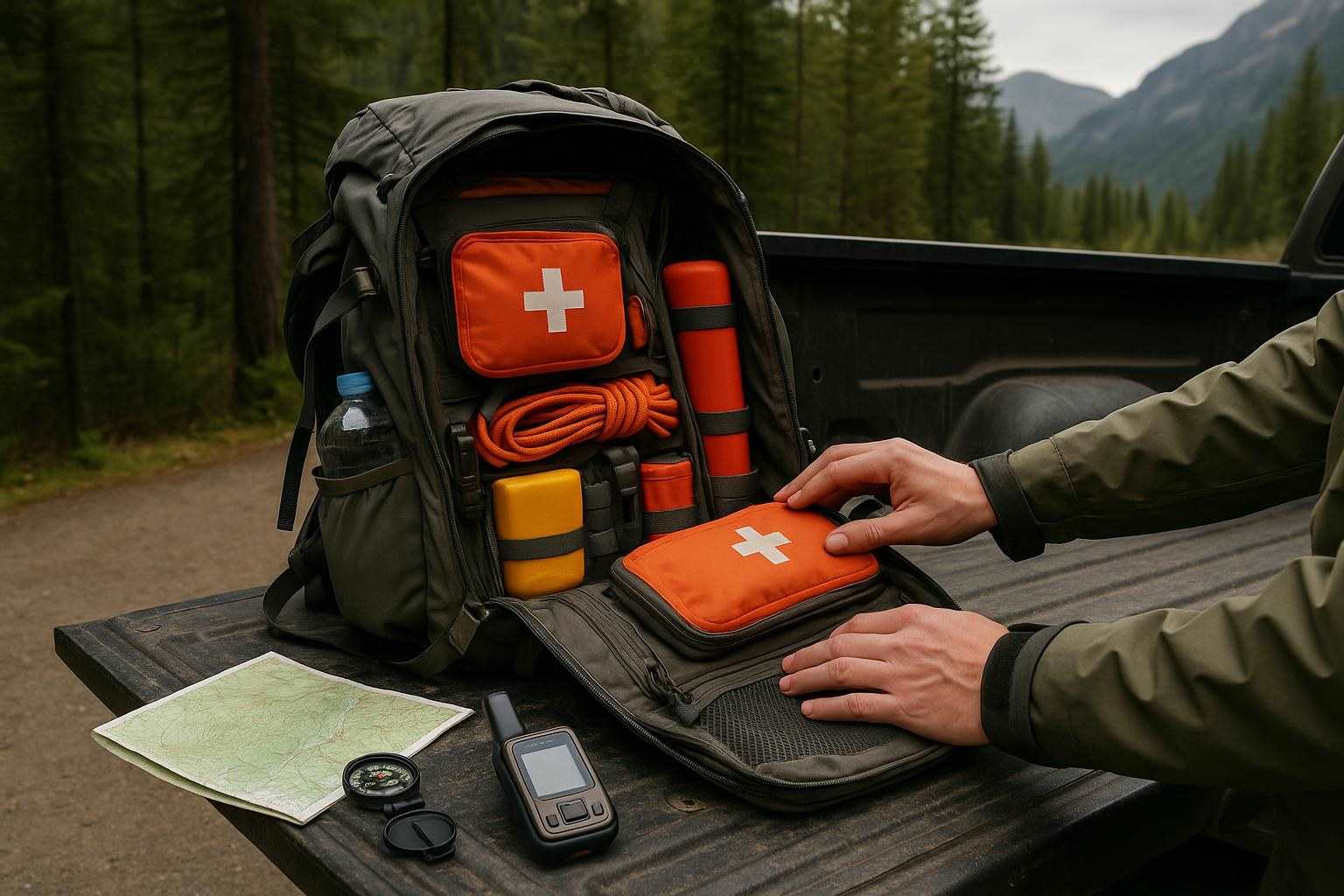
A useful pack is not defined by the length of its contents list. Every item should solve a known problem, and everyone should know where it is. Inspect for dead batteries, rusty tools, cracked containers, expired medicines, leaking fuel, weakened cord and packaging damaged by moisture or animals.
Use this pre-departure check:
– Navigation: route data, paper map, compass and a known backup method.
– Shelter: intact main shelter, ground insulation, repairs and weather-appropriate layers.
– Water and food: workable treatment method, sufficient carrying capacity and spare food usable without elaborate cooking.
– First aid: supplies suited to the group, checked medicines and reviewed allergies.
– Communication: charged devices, power supply, emergency contacts and written itinerary.
– Light and fire: dependable light, spare power and lawful, weather-appropriate means of making warmth if needed.
A checklist is not permission to carry equipment you have never used. Practice pitching the shelter, treating water, reading the map and sending an emergency message before departure.
Set decision points before fatigue takes over
People make poorer choices when cold, wet, hungry or embarrassed about turning back. Set conservative limits in advance: a time to abandon the destination, weather that triggers retreat, a maximum distance beyond the last reliable navigation check and symptoms that change the plan.
Use the simplest rule that fits the risk. If the route is no longer identifiable, stop and reassess. If someone is deteriorating, treat the problem rather than pushing toward camp. If the group cannot communicate its location or reach safe shelter, call for guidance before the situation becomes harder to manage.
A backup plan succeeds when it keeps a small problem from becoming an emergency. After each trip, review what failed, replace damaged gear and update route information. Preparedness is maintained through these quiet checks, not through a larger pack alone.